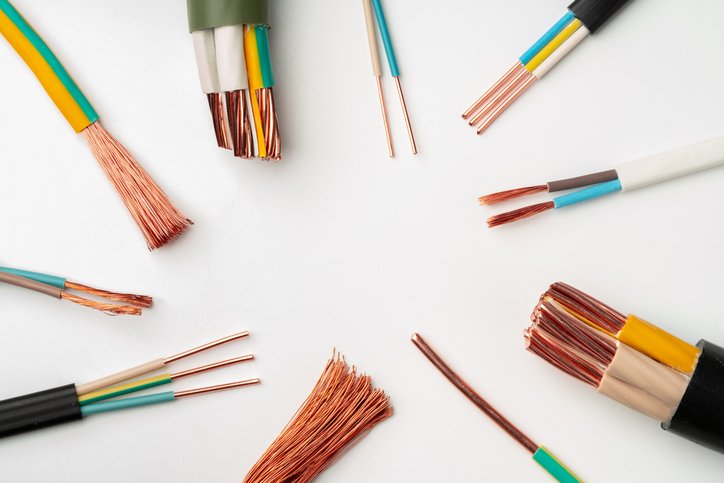
If you’re reading this as an engineer, contractor, or someone else involved in electrical installations, we’re sure you won’t need to be told that cables form the backbone of modern infrastructure. You will already be aware of the profound role that electrical cables play in the safe and efficient transit of power from source to destination.
However, you might not be so familiar with some of the specific aspects distinguishing low-voltage (LV) cables from their high-voltage (HV) counterparts.
Being well-educated on these differences is hugely important. In the UK, for instance, there are strict industry standards to which professionals must adhere, with the main one being BS 7671, otherwise known as the IET Wiring Regulations.
Even putting the regulatory compliance aspect to one side, grasping the ways in which LV and HV cables differ is of critical importance for ensuring system efficiency and safety in any electrical project.
So, How Do Low-Voltage and High-Voltage Cables Differ from Each Other?
Before we go any further, a quick note: we’re aiming this article chiefly at UK readers. Nonetheless, much of what we say will also be applicable to projects involving high-voltage or low-voltage cables elsewhere in the world.
Broadly speaking, in the UK, electrical cables are classified by the voltage they’re designed to handle. So, let’s begin by addressing voltage range and definitions:
- Low-voltage (LV) cables are defined as those going up to 1,000V AC (or 1,500V DC). AC, of course, refers to alternating current, and DCto direct current. This covers standard UK mains supplies, including 230V single-phase and 400V three-phase systems.
- High-voltage (HV) cables are defined as those used for transmitting electricity at voltages above 1,000V AC. In large-scale infrastructure, this can reach 132 kilovolts (kV), 275kV, or even 400kV for the National Grid.
You might be wondering, in the context of the above, what counts as a medium-voltage (MV) cable. BS 7671 doesn’t provide a formal definition for this. However, the term “medium voltage” is frequently used in the UK to describe the range from 1kV to 33kV, as is commonly found in industrial distribution and local substations.
The Other Vital Distinctions Between HV Cables And LV Cables
As the voltage level goes up, it is necessary for the structural design of a cable to change fundamentally to manage the higher electrical stress and heat.
In practice, then, there are certain other important differences between these frequently used types of electrical cables:
- The insulationused in LV cables is relatively thin, typically being made from PVC or XLPE. HV cables, by comparison, have significantly thicker insulation to guard against breakdown, with the materials used often being high-grade XLPE or EPR.
- Shieldingisn’t always present on LV cables but is frequently used in control and signal applications. As for HV cables, they typically incorporate metallic screening in the form of copper tape or braid, as a means of containing the electric field.
- The internal layersof an LV cable tend to be a simple structure of the conductor, insulation, and outer sheath. This contrasts with the complex multi-layers that characterise HV cables, encompassing semi-conductive layers and water-blocking tapes to prevent “water treeing”.
- The conductorsof LV cables are multi-stranded copper or aluminium, chosen with the aim of maximising current capacity. HV cables, meanwhile, use high-purity copper or aluminium, often “compact round stranded” to reduce cable size and improve electrical and mechanical performance.
High-Voltage Cables and Low-Voltage Cables: Crucial in Their Respective Ways
Ultimately, the decisions that you make between HV cables and LV cables for a project you’re coordinating will hinge on such factors as:
- The distance over which power needs to be transmitted
- The load requirements
- The environment in which the system will be installed
- Budget and long-term efficiency considerations
For example, while a typical domestic property in the UK will only need low-voltage cabling, in the case of a wind farm connecting to the grid, the use of high-voltage infrastructure will be essential.
Hopefully, these examples will help underscore for you that LV cables and HV cables serve distinct but equally important roles in the electrical landscape.
LV cables dominate everyday applications, thanks to their practicality and cost-effectiveness. It is HV cables, though, that allow for the efficient transmission of electricity across cities and regions. So, when it comes to all manner of contexts, systems, and projects, professionals cannot ignore either “category” of cable.