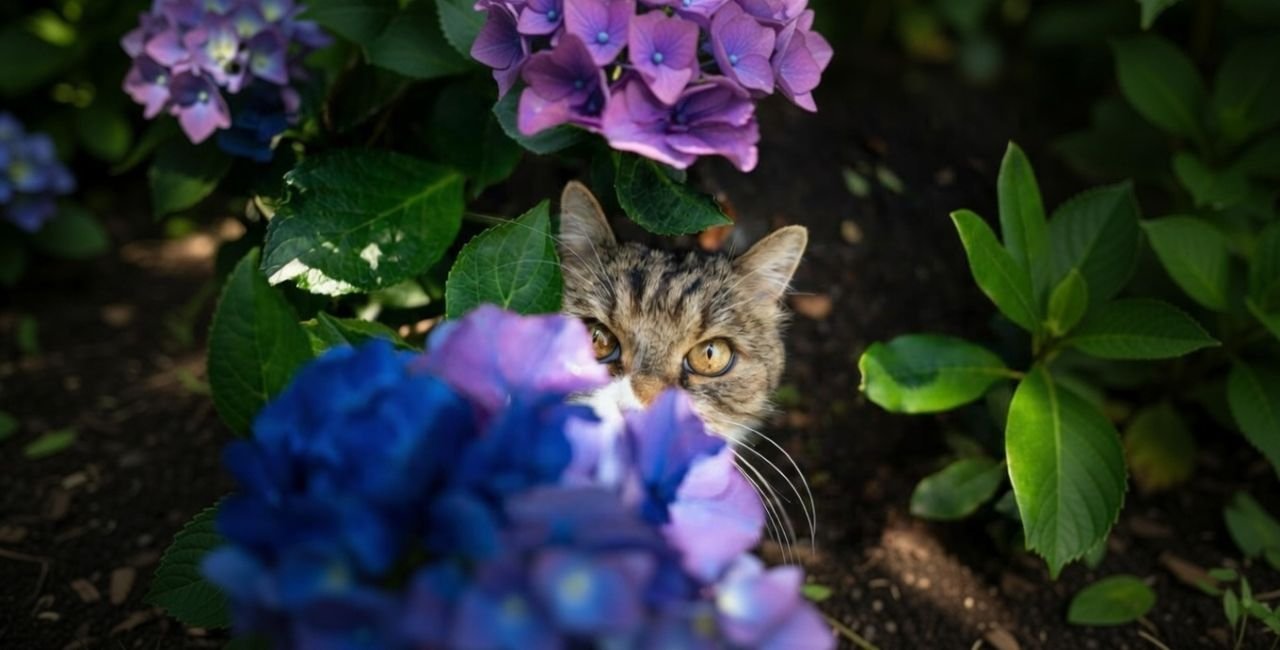
Are hydrangeas poisonous to cats? This question pops up often for people who love both beautiful gardens and their curious kitties. Many cat parents worry when they see those big, colorful flower clusters in their yard or on a windowsill. The good news is that while hydrangeas can cause some tummy trouble for cats, serious problems are quite rare. In this guide, you will find clear, helpful facts so you can feel confident keeping your home and garden happy for everyone.
Why Cat Owners Ask: Are Hydrangeas Poisonous to Cats?
Cats love to explore. They chew on leaves, bat at flowers, and sometimes snack on plants that look interesting. If you have hydrangeas, it makes sense to wonder are hydrangeas poisonous to cats. The short answer is yes, they contain a natural compound that can upset a cat’s stomach. But most cats recover quickly with the right care.
Hydrangeas come in many types—bigleaf, oakleaf, panicle, and more. People grow them for their lovely blooms that change color based on soil. Yet for our furry friends, these plants hide a mild toxin. Knowing the details helps you stay one step ahead.
What Makes Hydrangeas Harmful to Cats
Hydrangeas hold a substance called amygdalin. When a cat chews the plant, this turns into something like cyanide in small amounts. You might think cyanide sounds scary, and it can be in large doses. For cats, though, they rarely eat enough to reach that level.
The leaves and flowers have the most of this compound. Stems and roots have less. A cat that nibbles a few petals or a leaf usually gets only a mild reaction. Vets see this often, but true emergencies happen less than you might expect.
Are hydrangeas poisonous to cats in the same way as lilies? No. Lilies can cause kidney failure even from a tiny lick of pollen. Hydrangeas mainly bother the belly. This difference brings comfort to many cat owners who want pretty flowers without high risk.
Common Symptoms Your Cat Might Show
If your cat tries a hydrangea, watch for these signs:
- Vomiting or trying to vomit
- Loose stools or diarrhea
- Extra drooling
- Less interest in food
- Feeling tired or hiding more than usual
- Mild belly pain (your cat might seem restless)
In very rare cases, you might notice faster breathing or weakness. These point to the body having trouble using oxygen for a short time. Most cats bounce back in a day or two.
One cat owner shared that her young tabby ate a small flower head. He threw up twice and slept a lot the next day. By evening, he was playing again. Stories like this show why quick action matters but panic is not needed.
How Much Plant Does It Take to Cause Trouble?
Cats are small, so even a little plant can affect them more than a big dog. Still, experts say a cat would need to eat quite a bit—maybe several leaves or a whole flower—to feel really sick. Most kitties take one curious bite and stop.
Factors that matter:
- The cat’s size and age (kittens and older cats may feel it more)
- How much they ate
- Whether they chewed well (chewing releases more toxin)
- The type of hydrangea (some have higher levels)
Are hydrangeas poisonous to cats enough to ruin your garden plans? Not at all. Many people keep them and simply make smart choices.
What to Do Right Away If Your Cat Eats Hydrangea
Stay calm and act fast. Here are simple steps:
- Remove any leftover plant bits from your cat’s mouth if you can do it safely.
- Call your vet or a pet poison hotline right away. They will ask what your cat ate and how much.
- Watch closely for the next few hours. Note any symptoms.
- Do not try to make your cat vomit at home unless the vet tells you to.
Many vets recommend bringing a photo or piece of the plant to the clinic. This helps them know exactly what to watch for.
If symptoms stay mild, your cat may only need rest and extra water. For bigger worries, the vet might give medicine to settle the stomach or fluids to help.
How Vets Help Cats Who Ate Hydrangeas
Treatment is straightforward and works well. Vets focus on comfort:
- Medicines to stop vomiting
- Fluids to fight dehydration
- Something to coat the stomach
- In rare cases, medicine to support breathing
Most cats go home the same day. The ones who stay overnight usually feel much better by morning.
One reassuring fact: Cats who stay alert for two hours after eating usually do great. Their bodies clear the mild toxin quickly.
Smart Ways to Keep Your Cat Safe Around Hydrangeas
You do not have to choose between pretty flowers and your cat. Try these ideas:
- Place hydrangeas in hanging baskets or high shelves
- Use baby gates or plant barriers in the garden
- Create a “cat zone” with safe plants away from hydrangeas
- Train your cat with gentle redirection when they approach the wrong plants
- Choose indoor varieties that stay out of reach
Many cat owners in neighborhoods with lots of cats use these tricks and still enjoy full gardens.
Internal Link: For more ideas on creating a safe outdoor space, check out helpful resources at laaster.co.uk for cat-friendly garden tips.
Beautiful Plants That Are Safe for Cats
Why not swap or add these instead?
- Spider plants (fun to bat around)
- Boston ferns (soft and safe)
- African violets (pretty flowers)
- Calathea (colorful leaves)
- Marigolds (bright and cheerful)
- Snapdragons (tall and fun)
These plants look great and let your cat explore without worry. Many nurseries now label “pet safe” options.
Myths About Hydrangeas and Cats
Let’s clear up a few common stories:
- Myth: One bite will kill your cat. Fact: Mild upset is far more likely.
- Myth: All colorful flowers are dangerous. Fact: Many safe choices exist.
- Myth: Indoor hydrangeas are fine. Fact: Same rules apply—keep them up high.
Knowing the truth helps you make calm choices.
Other Plants to Watch in Your Home and Garden
Hydrangeas are not the only ones. From trusted sources, here are a few more to note:
- Lilies (very dangerous—avoid completely)
- Daffodils
- Tulips
- Foxglove
External Link: Read more about common poisonous flowers for cats at Vets Now.
Real Stories from Cat Lovers
Sarah from the Midlands had hydrangeas for years. When her cat nibbled one, she called the vet hotline. They said to watch for vomiting. Sure enough, her cat had a quiet day but was fine by dinner. Sarah now grows safe plants in the cat area.
Mike, a gardener with three cats, built a small fenced section for his hydrangeas. The cats ignore it and play with their own cat grass instead.
These everyday stories show that are hydrangeas poisonous to cats is a real question, but one with easy answers.
Expert Tips to Make Your Home Cat-Proof
Vets suggest these extra steps:
- Put new plants in a separate room for the first week
- Use bitter sprays on leaves (cats hate the taste)
- Offer cat grass or safe chew toys
- Check your yard after storms—fallen branches can tempt curious cats
Small habits make a big difference.
Frequently Asked Questions
Are hydrangeas poisonous to cats? Yes, but the risk is usually low. Most cats get mild stomach issues.
What should I do if my cat ate a hydrangea leaf? Call your vet immediately and watch for vomiting or tiredness.
Can I keep hydrangeas if I have cats? Absolutely. Just place them where cats cannot reach.
Do all hydrangea types affect cats the same? Bigleaf types have more toxin, but all need care.
Will my cat learn to stay away? Some do, especially if they feel sick once. Others need help from barriers.
Wrapping It Up: Peace of Mind for Cat Owners
Are hydrangeas poisonous to cats? Yes, they can cause mild problems, but you have many ways to enjoy both your garden and your cat. With smart placement, safe alternatives, and quick action if needed, you can create a home that feels wonderful for everyone.
Your cat counts on you to keep them safe, and you are already doing a great job by learning the facts. Have you dealt with plant worries before? Share your tips in the comments—we all help each other keep our furry friends happy and healthy.
References:
- PetMD. “Are Hydrangeas Poisonous to Cats?” Available at: https://www.petmd.com/cat/poisons/are-hydrangeas-poisonous-to-cats
- Vets Now. “Poison Flowers and Plants for Cats.” Available at: https://www.vets-now.com/pet-care-advice/poison-flowers-plants-cats/
- ASPCA Animal Poison Control. Toxic and Non-Toxic Plants List.
- Pet Poison Helpline. Hydrangea Toxicity Information.
- Gardening Know How. “Are Hydrangeas Poisonous to Cats?