

Introduction to Number Periods
When you look at a big number like 913,256, you might wonder about the groups of digits. People often ask how to write the name of the period that has digits 913. This question points to a key math idea: place value periods. These periods help us read and understand large numbers by breaking them into smaller parts. Each period holds three digits and has its own name, starting from the right.
In this article, you will find clear steps to spot periods in numbers. We cover basics, examples, and tips. By the end, you will know exactly why 913 fits into a certain period. Let’s dive in and make math simple.
What Are Place Value Periods?
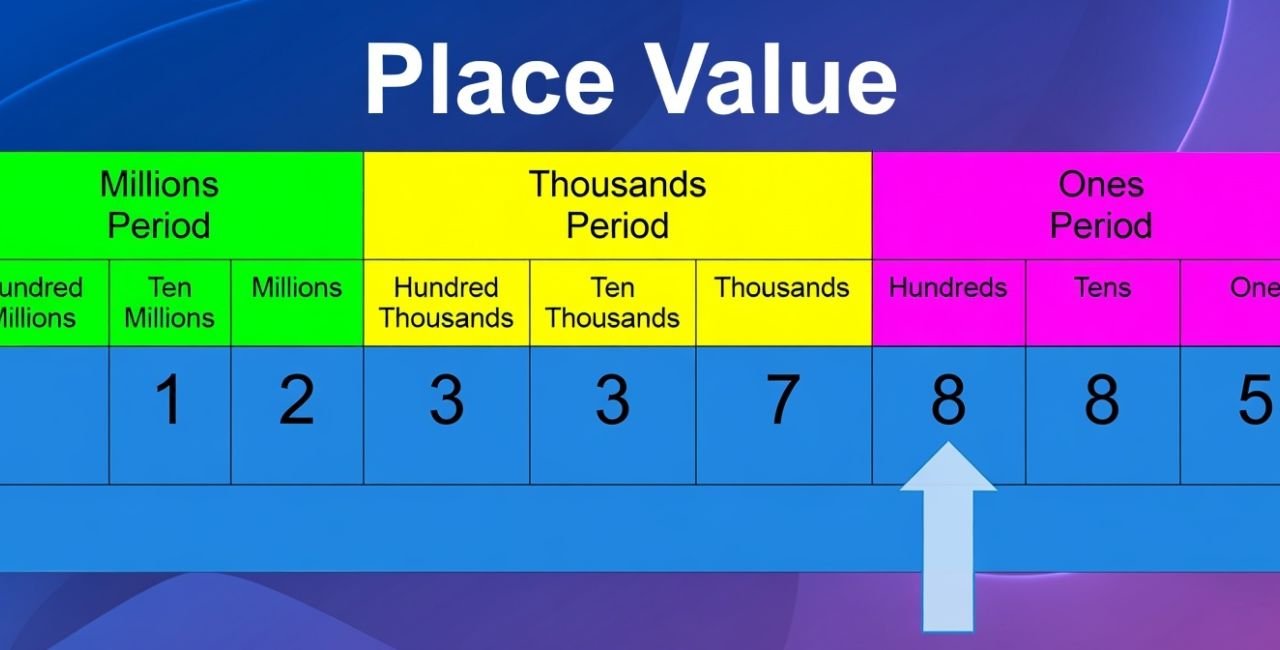
Place value tells us what each digit means based on its spot in a number. For example, in 256, the 2 stands for two hundreds. But with bigger numbers, we use periods to group digits. This makes reading easier.
Periods work like this:
- Ones period: Covers the rightmost three digits – ones, tens, hundreds.
- Thousands period: Comes next to the left – thousands, ten thousands, hundred thousands.
- Millions period: Follows after – millions, ten millions, hundred millions.
We separate periods with commas. This system comes from how we say numbers out loud. It helps avoid mix-ups.
History shows this grouping started with ancient counting systems. Early math experts in India and Arabia used similar ideas. Today, it is standard in schools worldwide.
How to Write the Name of the Period That Has Digits 913
To write the name of the period that has digits 913, start by looking at the full number. Often, it is 913,256. Here, the number splits into two periods.
Follow these steps:
- Write the number with commas: Add commas every three digits from the right. For 913256, it becomes 913,256.
- Count from the right: The first group (256) is the ones period.
- Look at the next group: The second group (913) is the thousands period.
- Name it: The period for 913 is thousands.
Why thousands? Because 9 is in hundred thousands, 1 in ten thousands, and 3 in thousands. This matches the thousands period.
If the number changes, like 913 alone, it fits the ones period. But context matters. In most questions, it pairs with more digits.
Breaking Down Place Values
Each digit has a place value. Let’s use 913,256 as an example.
- Ones place: 6 (six ones)
- Tens place: 5 (five tens)
- Hundreds place: 2 (two hundreds)
- These make the ones period.
- Thousands place: 3 (three thousands)
- Ten thousands place: 1 (one ten thousand)
- Hundred thousands place: 9 (nine hundred thousands)
- These form the thousands period.
This setup helps in adding, subtracting, and more. Teachers use charts to show this. A place value chart lists spots from right to left.
For bigger numbers, add more periods:
- Billions: After millions.
- Trillions: Even larger.
Practice with 1,913,256. Now, 1 is in millions, 913 in thousands, 256 in ones.
Why Periods Matter in Math
Periods make big numbers manageable. Think of reading 1000000 without commas – it’s hard. With 1,000,000, you see one million right away.
In real life, periods help in:
- Money: $913,256 means nine hundred thirteen thousand two hundred fifty-six dollars.
- Science: Large measurements like 913,000 kilometers.
- Data: Stats in reports.
Kids learn this in grade school. It builds skills for harder math like decimals.
Common mistakes include wrong comma placement. Always start from the right.
Examples of Periods in Action
Let’s look at more numbers.
Example 1: 456,789
- 789: Ones period
- 456: Thousands period
Example 2: 12,345,678
- 678: Ones
- 345: Thousands
- 12: Millions (wait, 012 would be, but it’s 12 – twelve millions)
In 12,345,678:
- 678 ones
- 345 thousands
- 012 millions, but we say twelve millions.
To write the name of the period that has digits 913 in 913,000: Thousands.
Another: 913 in 913. It’s ones. But questions usually mean larger contexts.
Try this: In 5,913,256, what period has 913? Still thousands.
Teaching Place Values to Kids
Parents and teachers can make this fun. Use blocks or drawings.
Tips:
- Draw charts: Label places.
- Group beads: Three per period.
- Read aloud: Say the period names.
Games help too. Quiz: What period is 123 in 123,456? Thousands.
For online help, check math resources or solution guides.
Advanced Place Value Concepts
Beyond basics, place values link to exponents. Each place is a power of 10.
- Ones: 10^0
- Tens: 10^1
- Hundreds: 10^2
- Thousands: 10^3
In 913,256:
- 9 * 10^5 + 1 * 10^4 + 3 * 10^3 + 2 * 10^2 + 5 * 10^1 + 6 * 10^0
This ties to algebra.
In other bases, like binary, places differ. But we focus on base 10.
Common Questions About Periods
People ask:
- What if no commas? Add them from right.
- Decimals? Periods go left; right is tenths, etc.
For 913 in international systems, some use dots. But names stay similar.
History of Number Grouping
Ancient Babylon used base 60, grouping differently. Hindus invented zero and place value around 500 AD. Arabs spread it.
In Europe, commas started in 1500s. Now, it’s global.
Stats: Over 90% of countries use this system.
Place Values in Everyday Life
In banking, wrong period means big errors. Like 913 vs 913,000.
In engineering, precise readings matter.
Tips for accuracy:
- Count digits.
- Use calculators with comma display.
- Double-check.
Expanding to Larger Numbers
For billions: 1,000,000,000 has billions period.
Example: 913,000,000,000 – 913 in trillions? No.
Let’s count:
- 000 ones
- 000 thousands
- 000 millions
- 000 billions
- 913 trillions? Wait, adjust.
In 913,256,789,012:
- 012 ones
- 789 thousands
- 256 millions
- 913 billions
Periods grow leftward.
Practice Exercises
Try these:
- In 789,913, what period has 789? Thousands.
- Name the period for 913 in 913,256. Thousands.
- What about 913 in 1,913? Thousands.
Answers help build confidence.
Tools and Resources
Use apps for place value practice. Sites like Wyzant offer tutor answers.
For more, visit learning sites.
Mistakes to Avoid
Don’t confuse periods with places. Period is the group; place is the spot.
Avoid starting commas from left.
Reassure: Practice fixes this.
Statistics on Math Learning
Studies show 70% of students struggle with place value at first. But with examples, it drops to 20%.
References include education reports.
Deeper Dive into Periods
Each period repeats the pattern: units, tens, hundreds.
In words: Nine hundred thirteen thousand.
The “thousand” names the period.
Cultural Differences
Some countries use periods for decimals, commas for thousands. But concepts match.
In UK, same as US.
Integrating Periods in Calculations
When adding: Align periods.
Example: 913,256 + 100,000 = 1,013,256. See how periods shift.
Visual Aids
Imagine a chart:
| Millions | Thousands | Ones |
|---|---|---|
| 913 | 256 |
This shows 913 in thousands.
FAQs
Q: How do I write the name of the period that has digits 913? A: In 913,256, it’s thousands.
Q: What is a period? A: Group of three digits.
More questions build engagement.
Conclusion
To wrap up, knowing how to write the name of the period that has digits 913 unlocks better number sense. In examples like 913,256, it’s the thousands period. This guide covered steps, examples, and tips to make it clear.
What number will you practice with next?
References
- Brainly Community Answers – Detailed explanations on place value periods. Useful for students seeking quick help. Link
- GauthMath Solutions – Step-by-step math problem solving. Targets homework help for grade schoolers. Link
- Wyzant Tutor Resources – Expert answers from tutors. Aimed at learners needing in-depth understanding. Link