
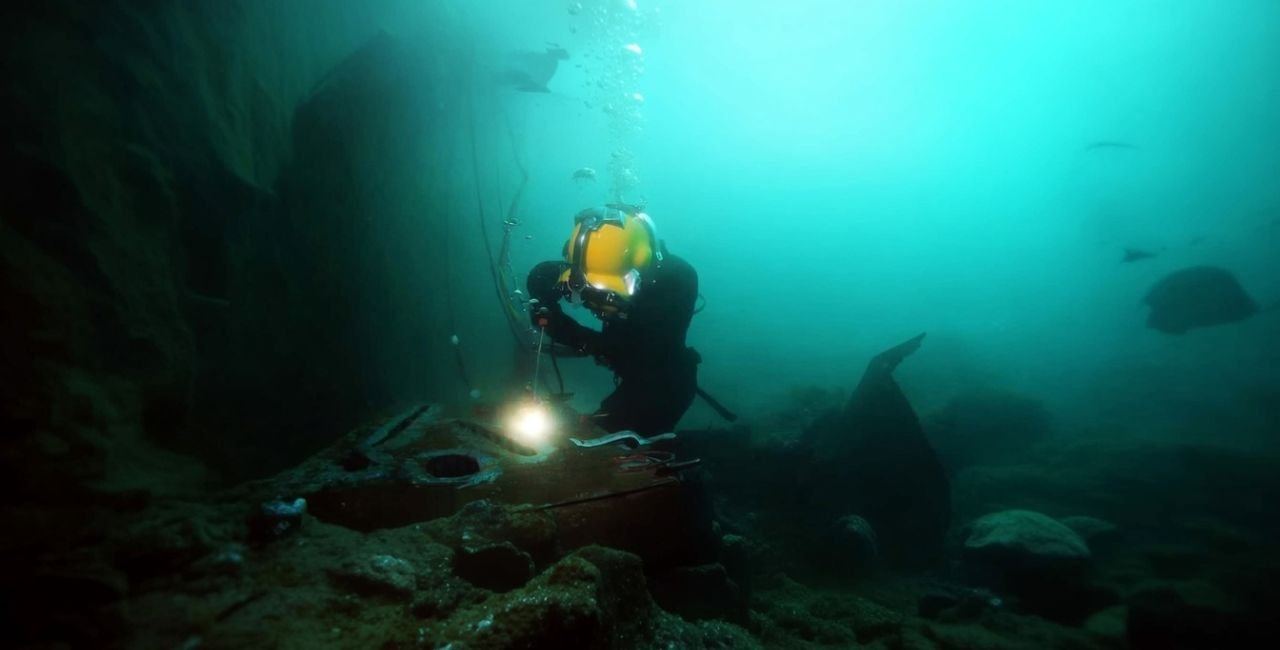
If you dream of combining skilled craftsmanship with adventure beneath the waves, the role of an underwater diver welder might captivate you. These professionals fuse metal structures in aquatic environments, ensuring the integrity of ships, pipelines, and oil rigs. They tackle challenging tasks where land-based welders cannot reach, using specialized tools to create strong bonds under pressure. This career demands precision, bravery, and rigorous preparation, but it rewards with substantial pay and unique experiences. In this article, we delve into the background, skills, and realities of becoming an underwater diver welder, drawing from industry expertise to help you decide if this path suits you.
What Is an Underwater Diver Welder?
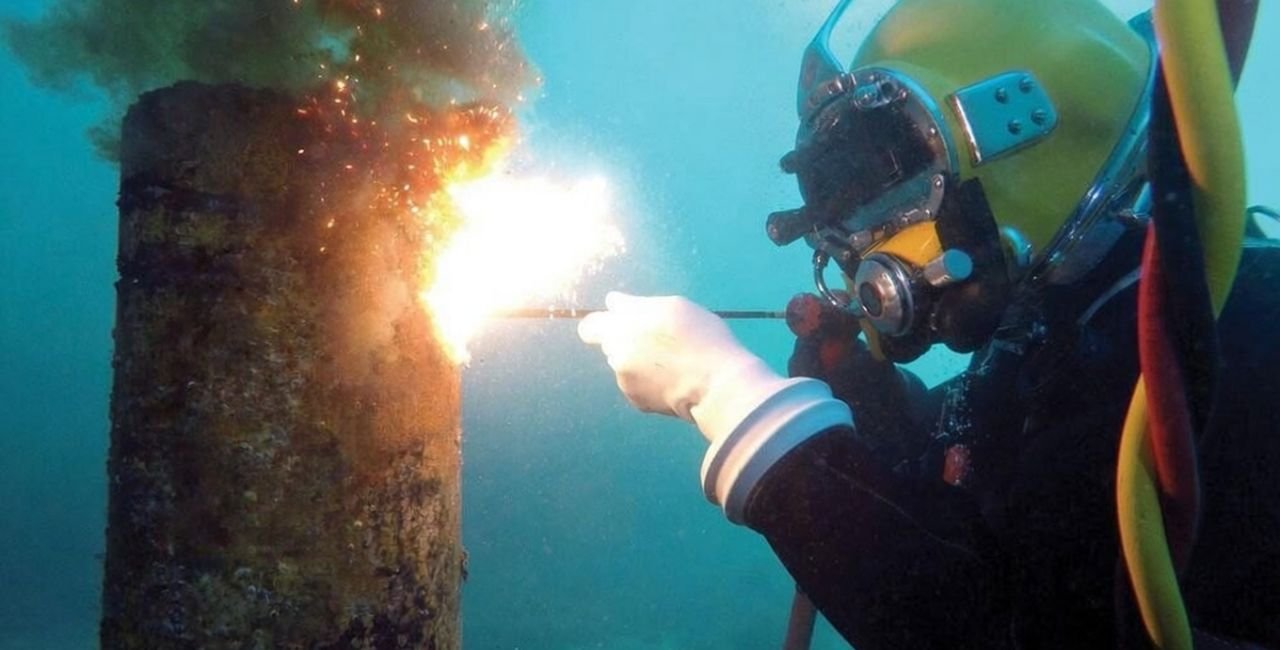
An underwater diver welder performs welding operations submerged in water, often at great depths. This job merges commercial diving with advanced welding techniques to repair or build underwater infrastructure. Workers in this field use electric arcs to melt and join metals, protecting the work area from water’s interference. The profession traces back to the early 20th century, when innovators sought ways to fix ships without dry-docking them.
Today, underwater diver welders operate in two main settings: wet and dry. In wet welding, they work directly in the water, relying on bubbles from shielding gases to maintain the arc. Dry welding happens inside sealed chambers filled with gas mixtures, allowing for higher-quality results. This distinction affects the tools, safety measures, and project types they handle.
The demand for underwater diver welders stems from global industries like oil and gas, where offshore platforms require constant maintenance. According to industry reports, the field supports thousands of jobs worldwide, with growth tied to renewable energy projects such as underwater wind farms.
History and Background of Underwater Diver Welders
The story of the underwater diver welder begins in 1932, when Russian metallurgist Konstantin Khrenov invented the first practical method for welding underwater. Khrenov used coated electrodes to create an electric arc that could function in wet conditions, revolutionizing marine repairs. Before this, damaged vessels had to be hauled to dry land, costing time and money.
During World War II, the technique gained traction for quick fixes on warships. By the 1960s, advancements in hyperbaric chambers allowed for dry welding, improving weld strength and reducing defects. Organizations like the American Welding Society (AWS) standardized practices, making the job safer and more efficient.
In modern times, underwater diver welders have contributed to major projects, such as repairing the Deepwater Horizon oil rig aftermath or maintaining subsea pipelines in the North Sea. Their work ensures safe energy transport and protects coastal environments from leaks. One notable achievement includes the 1980s development of friction welding underwater, which uses mechanical force instead of electricity to join materials, minimizing electrocution risks.
This background highlights how underwater diver welders evolved from experimental roles to essential experts in maritime engineering. Their contributions have saved billions in infrastructure costs and prevented environmental disasters.
Types of Underwater Welding Performed by Diver Welders
Underwater diver welders specialize in various welding types, each suited to specific conditions. Understanding these helps aspiring professionals choose their focus.
Wet Welding
This method occurs directly in water. The welder strikes an arc between an electrode and the metal, creating a bubble shield to block water. It’s quick and cost-effective for shallow repairs but challenges visibility and cooling rates.
- Advantages: Portable equipment; no need for chambers; ideal for emergencies.
- Disadvantages: Higher defect risks like cracks; limited to certain metals.
Dry Welding
Conducted in pressurized enclosures, dry welding mimics surface conditions. Gas mixtures like helium and oxygen fill the space, preventing water entry.
- Habitat Welding: Uses large chambers for teams; continuous gas flow removes fumes.
- Dry Chamber Welding: Smaller units fit the welder’s upper body; precise for intricate work.
- Dry Spot Welding: Mini-chambers cover just the weld area; efficient for spot fixes.
Dry methods yield superior quality, allowing heat treatments to strengthen bonds. Underwater diver welders often prefer this for critical structures like nuclear plant components.
Statistics show that dry welding accounts for about 70% of high-value offshore projects, as it reduces rework by up to 50% compared to wet techniques.
Key Processes in Underwater Welding
Underwater diver welders employ several processes to achieve strong joins. Each requires specific skills and equipment.
Shielded Metal Arc Welding (SMAW)
Also called stick welding, this uses coated electrodes to deposit filler metal. The coating creates shielding gas bubbles in wet environments.
Bold Steps for SMAW Underwater:
- Inspect the site: Check for hazards like currents or wildlife.
- Prepare surfaces: Clean rust and debris for better adhesion.
- Strike the arc: Use direct current to avoid shocks.
- Deposit filler: Control the electrode angle for even welds.
- Cool and test: Allow rapid cooling; inspect for cracks.
Flux-Cored Arc Welding (FCAW)
This feeds a tubular wire with flux, suitable for thicker materials. It’s versatile for nickel alloys in pipelines.
Gas Tungsten Arc Welding (GTAW)
Known as TIG, it uses a non-consumable tungsten electrode. Ideal for dry chambers, offering precision in high-stakes repairs.
Other Processes
- Friction Welding: Generates heat through rubbing; safe in wet conditions.
- Gas Metal Arc Welding (GMAW): Automates filler feed; efficient for long seams.
- Plasma Arc Welding: High-temperature plasma for accurate cuts and joins.
Mastering these processes takes practice, but they enable underwater diver welders to handle diverse tasks, from ship hulls to bridge supports.
Training and Certification for Underwater Diver Welders
Becoming an underwater diver welder starts with solid foundations in welding and diving. Reassuringly, structured paths exist to build skills safely.
First, gain surface welding experience. Certify through the AWS in techniques like SMAW. Then, enroll in commercial diving schools, where you learn buoyancy control, equipment handling, and emergency protocols.
Specialized underwater welding courses integrate both skills. Programs last 6-12 months, covering hyperbaric simulations and real dives. Costs range from $20,000 to $50,000, but scholarships and employer sponsorships help.
Bold Tips for Training:
- Choose accredited schools: Look for those approved by the Association of Commercial Diving Educators.
- Build physical fitness: Swimming and strength training prepare for demands.
- Gain apprenticeships: Shadow experienced welders for hands-on learning.
- Stay updated: Renew certifications every few years.
Graduates often start as assistants, advancing to lead roles. For resources on careers, visit Laaster, a hub for professional development in technical fields.
Career Paths and Achievements in Underwater Diver Welding
Underwater diver welders enjoy dynamic careers with opportunities for growth. Entry-level roles involve shallow repairs, progressing to deep-sea missions.
Achievements include pioneering techniques, like the first hyperbaric weld in the 1960s, which enabled safer offshore operations. Modern stars, such as those honored by the International Marine Contractors Association, have logged thousands of dive hours without incidents.
Career highlights:
- Repairing the USS Monitor wreck, preserving history.
- Installing subsea cables for internet connectivity.
- Supporting Arctic oil explorations under extreme conditions.
Many retire early, using earnings to start businesses. The field boasts low unemployment, with 90% of certified welders finding work within months.
Salaries and Earnings for Underwater Diver Welders
Earnings attract many to this profession. In the U.S., average salaries range from $50,000 to $90,000 yearly, with experienced pros exceeding $100,000. Factors like location boost pay—coastal areas like Texas offer premiums for offshore work.
For detailed salary insights, check Exploring Underwater Welding Salaries.
Bold Factors Influencing Pay:
- Experience Level: Beginners earn $50,000; veterans top $80,000.
- Project Depth: Deep-sea jobs add 20-50% bonuses.
- Industry: Oil and gas pay more than inland infrastructure.
- Certifications: AWS credentials increase rates by 15%.
Globally, UK welders make £25,000 to £230,000, reflecting demand in the North Sea. Reassuringly, overtime and hazard pay cushion the risks.
Risks and Safety Measures for Underwater Diver Welders
This job carries hazards, but proper measures minimize them. Key risks include electrocution, drowning, and decompression sickness from pressure changes. Fatality rates reach 15%, higher than logging, but training reduces this.
Bold Safety Steps:
- Use insulated gear: Prevents shocks in wet conditions.
- Monitor gas levels: Avoids explosions in chambers.
- Follow decompression protocols: Prevents “the bends.”
- Team coordination: Divers work in pairs for support.
- Regular health checks: Detects issues early.
Wildlife encounters, like sharks, are rare but addressed with barriers. Long-term, protect ears and lungs with medical oversight. Helpfully, advancements like robotic assists lower human exposure.
For more on risks, see discussions in Reddit’s Welding Community.
Applications and Real-World Examples
Underwater diver welders apply skills across sectors. In oil rigs, they fix pipelines to prevent spills. For ships, they patch hulls at sea, saving docking costs.
Examples:
- Bridges and Dams: Reinforce supports in rivers, as in the Mississippi River projects.
- Nuclear Facilities: Weld cooling systems underwater for safety.
- Renewables: Install turbine bases in ocean wind farms.
Statistics indicate over 80% of subsea oil infrastructure relies on these experts. Their work supports global trade, with repairs extending asset life by decades.
Challenges Faced by Underwater Diver Welders
Beyond physical dangers, challenges include isolation on remote rigs and irregular schedules. Weather disrupts dives, and equipment failures demand quick fixes.
Helpfully, mental resilience training helps cope. Many find the variety exciting, outweighing downsides.
Future Trends in Underwater Diver Welding
The field evolves with technology. Drones scout sites, reducing dive times. Sustainable practices focus on eco-friendly materials. Growth in blue economy jobs predicts 20% more positions by 2030.
Underwater diver welders will adapt to robotics, blending human skill with machines for safer operations.
FAQs About Underwater Diver Welders
What qualifications do I need to become an underwater diver welder?
Start with welding certification, then commercial diving training, and specialize in underwater courses.
How much does an underwater diver welder earn?
Averages $50,000-$90,000 in the U.S., higher with experience and depth.
What are the main risks for underwater diver welders?
Electrocution, drowning, and decompression sickness; mitigated by safety protocols.
Can women succeed as underwater diver welders?
Yes, with equal training opportunities and growing diversity in the field.
Where can I learn more about underwater diver welder techniques?
Refer to resources like What Is Underwater Welding.
Conclusion
In summary, the career of an underwater diver welder offers adventure, high rewards, and vital contributions to marine industries. From mastering wet and dry techniques to navigating risks with expert safety measures, these professionals ensure underwater structures remain robust. With proper training and dedication, you can thrive in this demanding yet fulfilling role. What sparks your interest in becoming an underwater diver welder—the pay, the thrill, or the impact? Share your thoughts below.
References
- TWI Global. “What Is Underwater Welding and How Does It Work?” Accessed January 21, 2026. This FAQ-style page provides in-depth explanations of welding types, processes, and risks, ideal for aspiring welders seeking technical knowledge. Link
- Ocean Corporation. “Exploring Underwater Welding Salaries.” Accessed January 21, 2026. Focuses on U.S. salary data and career factors, helpful for those evaluating financial aspects. Link
- Reddit r/Welding. “So Let’s Talk About Underwater Welding.” Accessed January 21, 2026. Community discussions offer real-user experiences on pros, cons, and advice, targeting curious beginners and veterans. Link