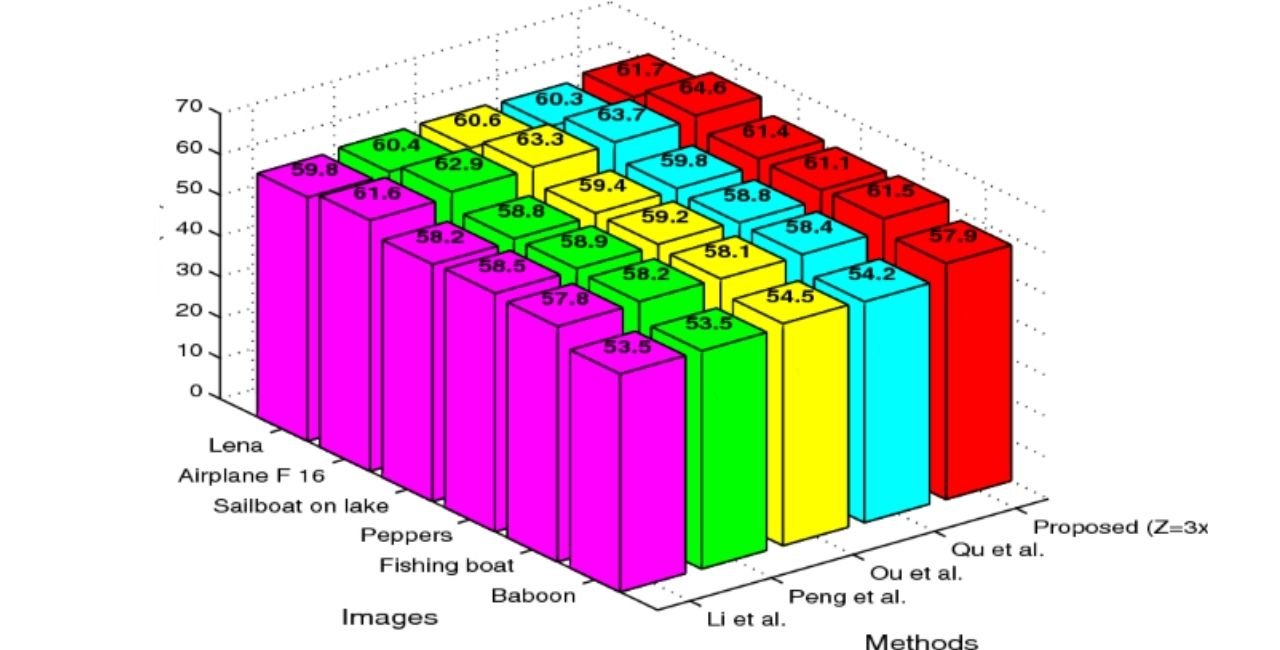
In the world of digital security, pixel value differencing stands out as a powerful tool for keeping information safe. This technique lets you hide secret data inside pictures so no one can tell it’s there. People use it to protect messages, files, or even medical records from prying eyes. As cyber threats grow, understanding pixel value differencing helps you stay ahead. Let’s dive into what makes this method so effective.
What Is Steganography?
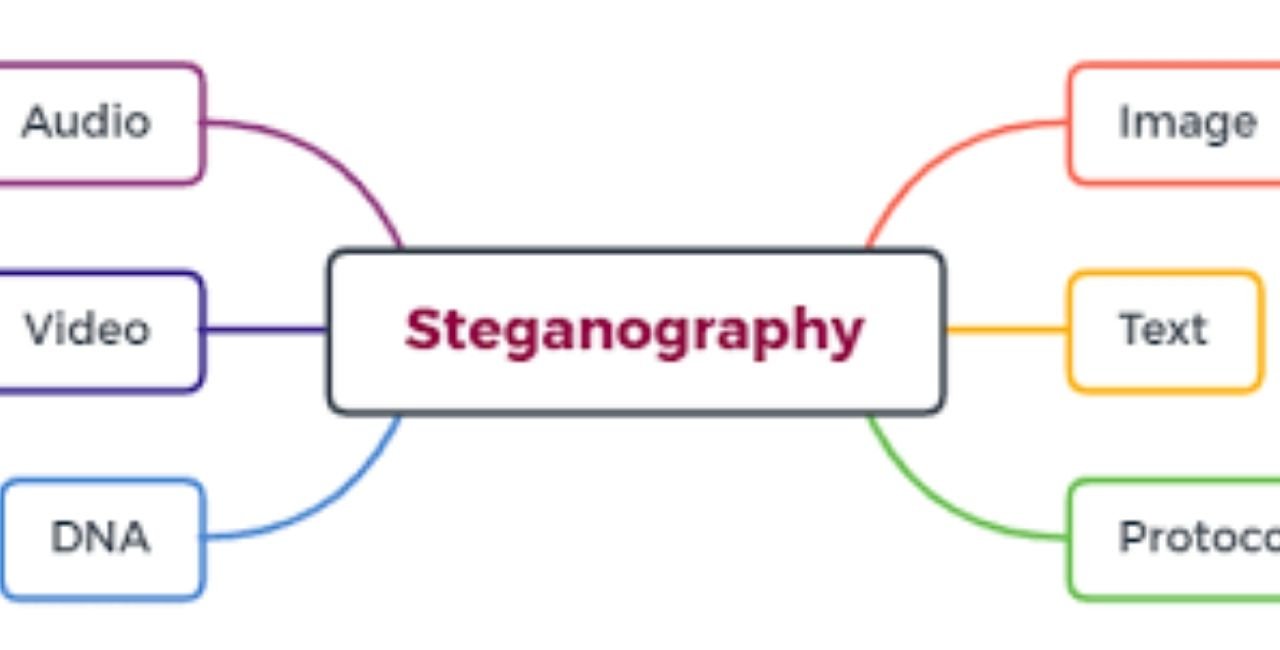
Steganography hides data within other data. Unlike encryption, which scrambles info, steganography makes the hidden part invisible. You can tuck away text, images, or codes inside a photo, and it looks normal.
Experts trace steganography back to ancient times. Greeks hid messages on wax tablets. Today, it’s digital. Images work well because they have lots of pixels. Each pixel holds color info, and small changes don’t show.
Common methods include least significant bit (LSB) replacement. LSB changes the last bit of a pixel’s value. It’s simple but easy to spot with tools. That’s where pixel value differencing improves things. It uses differences between pixels to decide how much data to hide.
The Basics of Pixel Value Differencing
Pixel value differencing, often called PVD, focuses on pairs of pixels. It calculates the gap between their values. Small gaps mean smooth areas, like a blue sky. Big gaps mean edges, like a tree against the sky.
Human eyes notice changes less in busy areas. PVD hides more data in edges and less in smooth spots. This keeps the image looking real.
Da-Chun Wu and Wen-Hsiang Tsai introduced PVD in 2003. Their paper laid the groundwork. They showed how to divide images into blocks and adjust differences without ruining quality.
To grasp PVD, think of a grayscale image. Each pixel has a value from 0 to 255. Black is 0, white is 255.
- Pair pixels: Take two next to each other.
- Find difference: Subtract one from the other.
- Classify: Put the difference into ranges, like 0-7 or 8-15.
- Embed bits: Based on the range, hide a certain number of bits by tweaking the difference.
This way, changes blend in. For color images, apply PVD to red, green, and blue channels separately.
How Pixel Value Differencing Works Step by Step
Let’s break it down simply. You start with a cover image—the one you’ll hide data in. The result is a stego-image.
-
Divide the Image: Split into non-overlapping pairs of pixels. Scan left to right, top to bottom, or use a zigzag pattern for better security.
-
Calculate Difference: For pixels p1 and p2, difference d = |p1 – p2|.
-
Assign Ranges: Use a table. For example:
- 0-7: Hide 3 bits
- 8-15: Hide 4 bits
- 16-31: Hide 5 bits
- And so on, up to 128-255: Hide 8 bits
Ranges are powers of 2 for easy math.
-
Embed Data: Convert secret message to binary. Take bits equal to the range’s capacity. Adjust d to a new value d’ in the same range that matches the binary value.
-
Update Pixels: Change p1 and p2 so their new difference is d’. Keep changes small to avoid overflow (values over 255 or under 0).
-
Add Security: Use a key for pseudo-random order. This scrambles the path, making it hard to crack without the key.
To extract:
- Use the same order.
- Calculate difference in stego-pairs.
- Find the range.
- Extract bits from the difference’s position in the range.
No need for the original image. That’s a big plus.

This diagram shows a basic PVD setup, like in LSB comparisons.
Advantages of Pixel Value Differencing
PVD shines in several ways:
- High Capacity: Hides more data than LSB in edgy images. Smooth images hide less, but that’s smart—it avoids detection.
- Imperceptibility: Changes are hard to see. PSNR (peak signal-to-noise ratio) scores often top 40 dB, meaning great quality.
- Security: Adapts to image content. Statistical attacks struggle because differences look natural.
- Efficiency: Fast for computers. No heavy transforms like in frequency methods.
Studies show PVD stego-images pass visual checks. In tests with Lena image (a standard test pic), embedding 500KB caused minimal distortion.
Compared to LSB, PVD resists histogram analysis better. Histograms plot pixel values. LSB spikes at even/odd values; PVD smooths them.
Limitations and Challenges
No method is perfect. PVD has drawbacks:
- Falling-Off Boundary: If adjusting pixels pushes values outside 0-255, you skip or adjust, losing capacity.
- Smooth Image Issues: Low differences mean low hiding space. A blank white image hides almost nothing.
- Detection Risks: Advanced tools like chi-square tests spot patterns in differences.
- Grayscale Focus: Original PVD is for gray images. Color needs tweaks.
Histogram analysis reveals steps in difference plots. Pre-embed, it’s smooth; post-embed, jagged.
Chi-square attack measures how much data is hidden. Early PVD fails here, but improvements fix it.
Universal detectors use machine learning to flag stego-images. They train on features like pixel correlations.
Improvements to Pixel Value Differencing
Researchers keep enhancing PVD. Since 2020, advances include:
- Adaptive Ranges: Machine learning picks ranges based on image type. A 2025 paper on adaptive PVD with ML boosts intelligence for secure chats.
- Genetic Algorithms: GA-IPVD (2023) uses genetics to reorder pixels. This optimizes matching, cuts distortion while hiking capacity.
- Encryption Combos: Pair PVD with AES or ChaCha20. A study on medical data security encrypts patient info first, then hides it. ChaCha20 is faster for big files.
- Multi-Direction: Seven-way PVD scans pixels in seven directions using 3×3 blocks. This captures more edges.
- Pixel Shifting: After embedding, shift pixels to refine quality. A 2023 method raises PSNR by 2-3 dB.
- Modulus Function: Block-based PVD with modulus avoids boundary issues. It wraps values instead of skipping.
- Color Adaptations: P-ADPVD uses histograms of oriented gradients (HOG) for color images. It directs embedding along edges.
These tweaks make PVD tougher against attacks. For example, variable-range PVD preserves Gaussian histograms, fooling analysis.
In a 2021 steganalysis paper, statistical features detect PVD, but new versions lower detection to under 10%.

Here’s a visual of PVD embedding from a key paper.
Applications of Pixel Value Differencing
PVD fits many uses:
- Secure Communication: Hide messages in photos for spies or journalists.
- Medical Data: Protect patient records. Embed encrypted info in X-rays.
- Copyright Protection: Watermark images without visible marks.
- Military: Conceal plans in maps or satellite pics.
- Mobile Apps: Android apps use PVD for quick hiding on phones.
In healthcare, combining PVD with ChaCha20 secures telehealth. A thesis showed low detection rates.
Businesses use it for confidential docs. Send invoices with hidden notes.
For more on digital security tools, check out Laaster.
Examples of Pixel Value Differencing in Action
Let’s walk through a simple example.
Take pixels: 100 and 105. Difference d=5.
Range 0-7 allows 3 bits (since 8=2^3).
Secret bits: 101 (decimal 5).
New d’ = lower bound (0) + 5 = 5. But to embed, d’ = lower + decimal.
Actually: Number of bits n = log2(width). For 0-7, width 8, n=3.
Decimal b from bits.
d’ = lower + b if d in lower half, or adjust.
In original: d’ = lower + b, ensure same range.
If d=5, lower=0, b=5, d’=5 (no change if b=d – lower).
But if b=6, d’=6.
Then new pixels: Keep average, so add/sub half the change.
p1′ = 100 – 0.5, p2′ = 105 + 0.5, but integers: Use formulas.
p1′ = (p1 + p2 – d’) / 2, wait no.
Standard: m = (p1 + p2)/2 rounded, then p1′ = m – d’/2, p2′ = m + d’/2.
For d even/odd care.
This keeps sum same.
Another example: Big difference, say 200 and 50, d=150.
Range 128-255, width 128, n=7 bits.
Hide more.
Real tests: On Baboon image (hairy, edgy), PVD hides 20% more than LSB.
Peppers (smooth) hides less but looks perfect.
Comparing Pixel Value Differencing to Other Methods
PVD vs LSB:
- Capacity: PVD higher in textures.
- Quality: PVD better PSNR.
- Security: PVD resists more attacks.
Vs Frequency Domain (DCT in JPEG):
- PVD spatial, easier, but JPEG compression ruins it.
- DCT survives compression but lower capacity.
BPCS (bit-plane) hides in complex planes.
PVD simpler.
Surveys say PVD popular for spatial stego.
A 2024 ACM survey notes PVD’s role in modern hybrids.
Security Analysis of Pixel Value Differencing
Attackers try to detect or extract.
- Visual Attacks: Eye check—PVD passes.
- Statistical: Histogram—old PVD fails, new preserves.
Chi-square: Measures randomness. Improved PVD scores low probability of hiding.
- Machine Learning: Train on features like adjacent differences. But adaptive PVD confuses models.
To reassure: Use keys and combos. Encrypt first.
References like the original Wu-Tsai paper show dual stats tests.
In El-Alfy’s work, they detail attacks and fixes.

This histogram illustrates difference changes in PVD.
Recent Advancements in Pixel Value Differencing
Since 2020, PVD evolves.
2025: ML adaptive PVD learns image patterns for optimal embedding.
2023: GA optimizes pixel order.
Medical: PVD + ChaCha20 hides health data.
Steganalysis: New features detect, but countermeasures rise.
Seven-way: Multi-direction boosts capacity.
Shifting: Post-embed adjust.
Android: Mobile PVD with diamond.
Surveys highlight PVD’s staying power.
New inter-pixel with quantized tables.
Block modulus.
State-of-art reviews.
Octuple PVD analysis.
PVD survey.
Trends in spatial.
Color ADPVD with HOG.
These push capacity up 30%, detection down.
Implementing Pixel Value Differencing: Tips and Tricks
Want to try? Use Python with libraries like Pillow.
Pseudocode for embedding:
def pvd_embed(cover, secret, key):
Seed random with key
pairs = get_pairs(cover)
shuffle(pairs, key)
for pair in pairs:
d = abs(pair[0] – pair[1])
range = find_range(d)
bits = get_bits(secret, range.size)
new_d = range.lower + int(bits, 2)
adjust_pair(pair, new_d)
return stego
Keep ranges power-of-2.
Avoid overflow: If new pixel <0 or >255, use modulus or skip.
Test with standard images like Lena.
For security, encrypt secret first.
Future Trends in Pixel Value Differencing
Looking ahead, PVD merges with AI. Neural nets pick best spots.
Quantum computing may break old security, so quantum-resistant PVD.
Video PVD: Hide in frames.
Blockchain: Secure stego with ledgers.
As 5G grows, fast PVD for real-time.
Experts predict hybrid methods dominate.
FAQs About Pixel Value Differencing
What is pixel value differencing? It’s a stego method using pixel gaps to hide data.
How does pixel value differencing compare to LSB? PVD hides more in edges, better quality.
Is pixel value differencing secure? Yes, with improvements, resists many attacks.
Can I use pixel value differencing for color images? Yes, apply to each channel.
What tools help with pixel value differencing? Python, MATLAB for prototyping.
Conclusion: Why Pixel Value Differencing Matters
In summary, pixel value differencing offers a reliable way to conceal data in images. From its 2003 roots to today’s AI boosts, it balances capacity, quality, and security. Whether for personal privacy or professional use, PVD reassures with its adaptability.
Have you explored pixel value differencing in your projects yet?
References
- Wu, D.C., Tsai, W.H. (2003). A steganographic method for images by pixel value differencing. Pattern Recognition Letters. Link
- El-Alfy, E.S.M., Al-Sadi, J.A. (2012). Pixel value differencing steganography: Attacks and improvements. ICCIT. Link
- Swain, G. (2013). Adaptive pixel value differencing steganography using both vertical and horizontal edges. Multimedia Tools and Applications. Link